
In recent years, the trade agreement between the European Union and MERCOSUR has become one of the most debated topics in the international economic and political landscape.
It is a far-reaching agreement aimed at strengthening commercial relations between two strategic regions, with significant implications for key sectors such as agri-food.
For companies operating in the international trading of pulses, grains, and agricultural commodities—such as SAG Pulses BV—it is essential to assess the agreement through a technical, impartial, and fact-based lens.
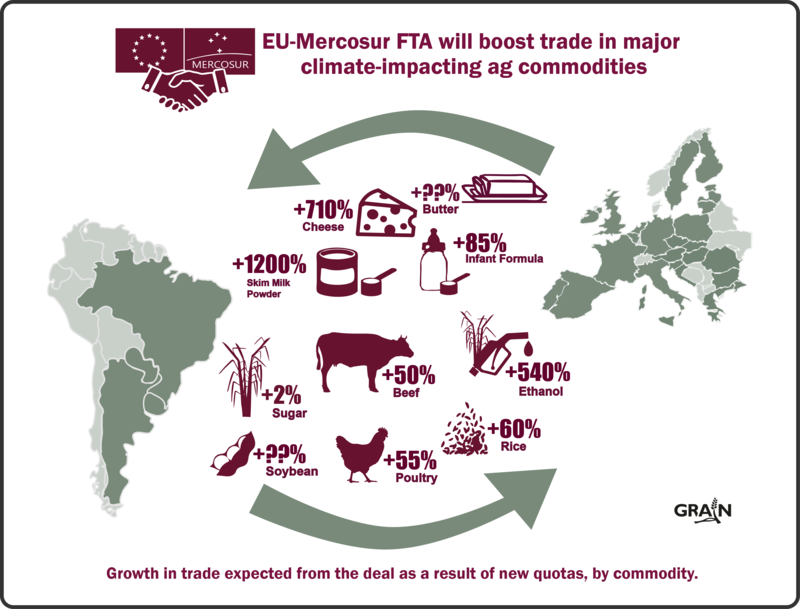
What is the EU – MERCOSUR Agreement
The EU – MERCOSUR agreement is a free trade treaty negotiated between the European Union and the MERCOSUR member countries (Argentina, Brazil, Paraguay, and Uruguay).
Its stated objective is the reduction of tariff and non-tariff barriers, alongside the establishment of a shared regulatory framework to facilitate trade, protect investments, and enhance economic cooperation.
Although negotiations have been politically concluded, the agreement is not yet fully in force and still requires ratification by EU Member States.
Potential Benefits of the Agreement
From a trade perspective, the agreement offers several recognized potential advantages.
Improved market access
The gradual reduction of customs duties may lead to increased bilateral trade flows, enhancing competitiveness between the two regions.
Regulatory predictability
Common rules and institutional cooperation mechanisms can help reduce uncertainty, a key factor for companies operating across global markets.
Stronger agri-food supply chains
MERCOSUR countries are among the world’s leading producers of agricultural commodities. The agreement may facilitate sourcing diversification and contribute to greater integration of global agri-food supply chains.
B2B trade opportunities
For agricultural trading companies, the agreement could result in more efficient customs procedures and lower transaction costs.
Challenges and Concerns of European Farmers
Alongside these potential benefits, the EU – MERCOSUR agreement raises notable concerns, particularly within the European agricultural sector.
In recent years, several EU countries have experienced widespread farmer protests, reflecting broader structural difficulties in the sector. Within this context, the agreement is often cited as a contributing factor to growing tensions.
A prominent example is France, where farmer mobilizations have been especially visible. While not solely linked to the agreement, EU – MERCOSUR is frequently perceived as an element that could exacerbate existing challenges.
Key reasons behind the opposition include:
- Competition between different production models
- Pressure on agricultural incomes
- Concerns regarding enforcement of EU standards on imported products
These protests do not represent opposition to international trade itself, but rather a call for greater balance between market openness and the protection of local agricultural systems.
Environmental and Sustainability Considerations
Environmental impact is another central issue in the debate. The agreement is often evaluated in terms of its ability to reconcile trade expansion with sustainability goals, particularly in environmentally sensitive regions.
A Balance Still to Be Defined
The EU – MERCOSUR agreement should be viewed as a complex policy instrument. Its real impact will depend on implementation, monitoring mechanisms, and continuous dialogue between institutions, businesses, and agricultural stakeholders.
In an increasingly interconnected global economy, the EU – MERCOSUR agreement highlights the strategic importance of agri-food trade.
A fact-based, non-ideological analysis remains essential to turning regulatory change into opportunities for cooperation and sustainable growth.